Understanding AC Compressor Problems
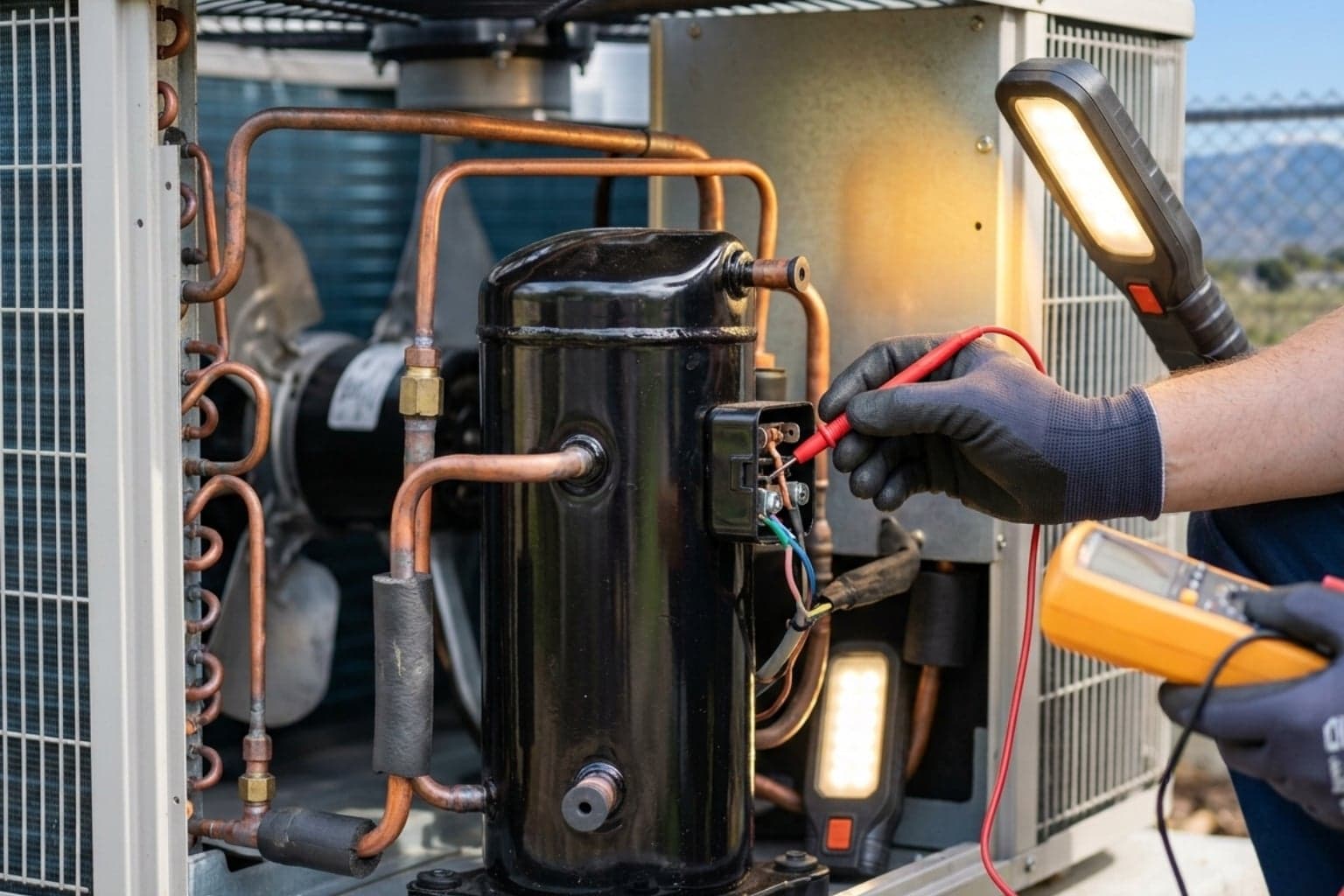
The compressor is the single most critical and expensive component in your air conditioning system. It pressurizes refrigerant and circulates it between the indoor evaporator and outdoor condenser, making cooling possible. When the compressor fails, your AC cannot produce cold air.
Compressor problems in the Salt Lake City area are more common than national averages because of Utah's high altitude. At 4,200+ feet, compressors work at higher head pressures than at sea level, accelerating wear on bearings, valves, and windings. Combined with summer temperatures that regularly exceed 95 degrees, Salt Lake City compressors operate near their design limits during peak cooling season.
Signs Your AC Compressor Is Failing
Hard starting. The outdoor unit hesitates, buzzes, or trips the circuit breaker when trying to start. This often indicates a failing start capacitor or worn compressor motor windings. A hard start kit can sometimes extend compressor life by 2 to 5 years for $150 to $300.
Warm air from vents. If your system runs but only produces room-temperature or warm air, the compressor may have lost its ability to pressurize refrigerant. This can result from worn internal valves, a locked rotor, or a refrigerant leak that caused the compressor to overheat.
Grinding or clattering sounds. Internal compressor bearing failure produces distinctive metallic grinding sounds. Once bearings fail, the compressor cannot be repaired and must be replaced.
Outdoor unit vibrating excessively. Worn mounts or internal damage cause the compressor to vibrate beyond normal levels, sometimes hard enough to rattle the entire condenser unit.
Frequent circuit breaker trips. A compressor drawing excessive amperage (often due to worn windings or internal shorts) trips the breaker as a safety measure. This should never be ignored, as it indicates an electrical fault that could cause a fire.
Compressor Repair vs Replacement: The Decision Framework
Our partner technicians follow a straightforward framework to help you decide.
Repair makes sense when: The compressor itself is working but a connected component has failed (capacitor, contactor, wiring). The system is under 8 years old with a valid warranty. The issue is a refrigerant leak at a connection point, not within the compressor itself.
Compressor replacement makes sense when: The compressor has failed mechanically (locked rotor, failed bearings, burned windings) but the rest of the system is in good condition and under 10 years old. A new compressor costs $800 to $2,500 installed, depending on the system size and refrigerant type.
Full system replacement makes sense when: The system is over 12 years old, uses R-22 refrigerant (which is no longer manufactured and costs $100 to $200+ per pound), or has had multiple major repairs. Installing a new compressor in an aging system often leads to another expensive repair within 1 to 3 years.
AC Compressor Repair and Replacement Costs
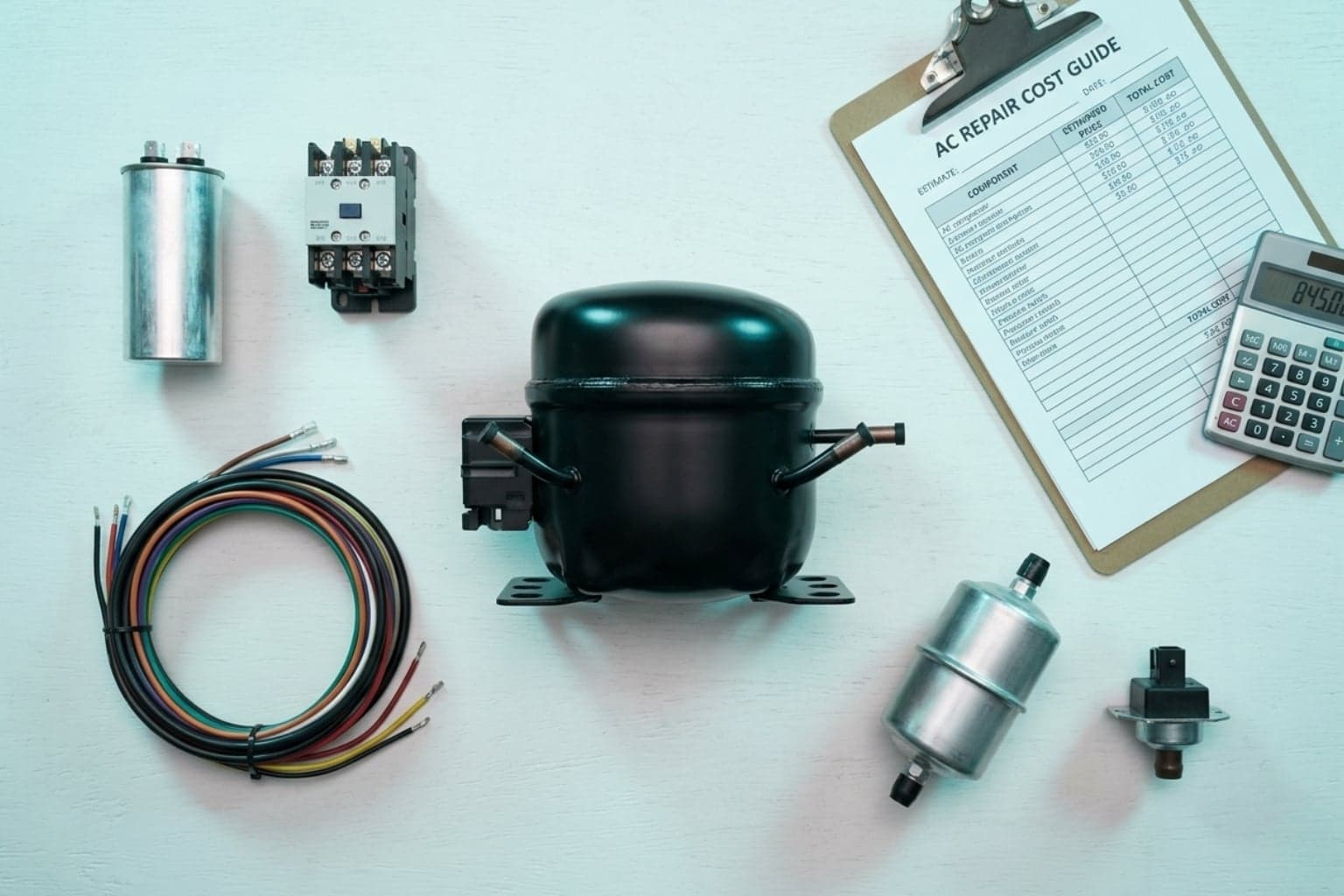
Capacitor replacement (often misdiagnosed as compressor failure): $100 to $250
Contactor replacement: $100 to $300
Hard start kit installation: $150 to $300
Compressor replacement (R-410A system): $800 to $2,000
Compressor replacement (R-22 system): $1,200 to $2,500 (includes refrigerant cost)
Full system replacement (when compressor repair is not justified): $4,000 to $10,000+
Our partner technicians always check simpler, less expensive causes before diagnosing a compressor failure. A failed $150 capacitor produces symptoms identical to a failed $1,500 compressor. Proper diagnosis saves you money.